

Every autumn, pockets fill with horse chestnuts and somebody claims their conker is unbeatable. The game takes five minutes to learn: two players, one conker each, threaded on string, taking turns to swing at the other's until one of them cracks. The fiddly part is the rules. Conkers is a folk game, passed along through playgrounds and village competitions, so versions differ from street to street.
What follows is the standard two-player game as it is most commonly played, with the points of disagreement flagged so you can settle them before the first swing rather than after the first broken conker.
What you need to play
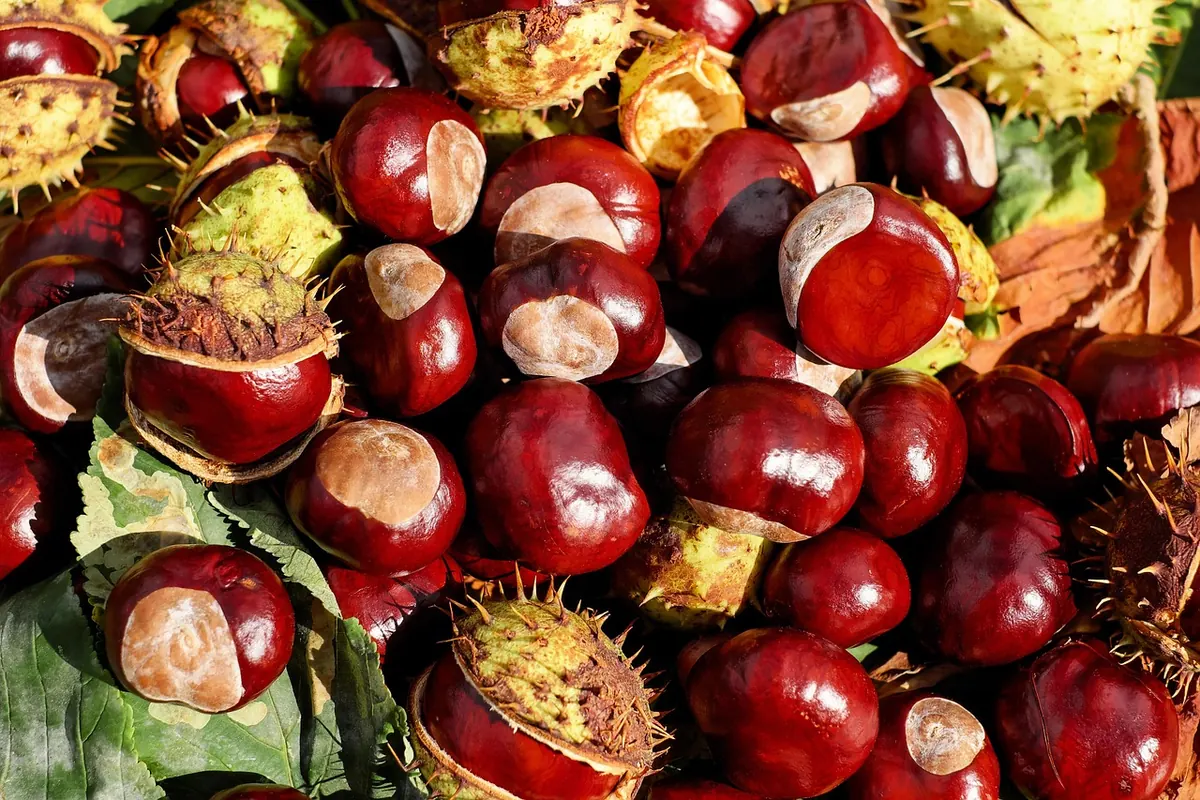
- Two conkers. Firm, glossy brown horse chestnuts with no cracks, soft spots or wormholes. Pick them up off the ground after they fall; one still snug in its spiky green case is too fresh and will give way quickly.
- String. Thin, strong cord works better than wool or shoelace. Around 30cm (12 inches) per player is plenty — you want the conker to dangle with a little slack, not swing like a pendulum on a rope.
- Something to make a hole. A skewer, a thin nail, a knitting needle or a fine drill bit. Nothing blunt, and nothing so wide that it splits the nut.
- Optional. A bead or a firm knot as a stopper, and a cloth to protect your palm while you push the skewer through.
Making the hole is the most common way to injure yourself. Rest the conker on a firm surface, keep your fingers behind the point and push away from your body. And keep them out of mouths: horse chestnuts are not edible and can make people and animals ill if eaten, so don't leave them within reach of pets or toddlers.
Preparing and stringing your conker
- Push the skewer through the centre of the conker, from the flat side towards the rounded side, until the point comes out the other end. Twist gently rather than forcing it.
- Thread the string through the hole and tie a knot large enough that it cannot pull back through, or slide a bead on and knot below it. The conker should sit near the end of the string with a short tail beyond the knot.
- Trim any loose fibres and check the knot holds when you tug it.
- Hold the other end of the string a hand-span or so above the conker, wrapped once around your fingers or just gripped. You want the conker hanging about 10–15cm below your hand, free to swing.
There are as many hardening rituals as there are conker players: a year in a dark drawer, a soak in vinegar, a slow bake in a low oven, a coat of clear varnish. All of them change the conker, and some make it brittle enough to split on the first solid hit. Many organised competitions ask for natural, untreated conkers, so check before you enter. Between friends, agree what is allowed before the first game rather than after you have lost one.
How a game works: turns and strikes
One player strikes, the other holds. Then you swap, and you keep swapping until something breaks.
- Decide who starts — a coin toss, odd or even, or whoever has the smaller conker.
- The holder dangles their conker at a height that suits the striker, usually around chest or waist level, and keeps it as still as they can.
- The striker grips their own string, draws the conker back and swings it down at the target. One swing, one strike.
- If the target survives, the roles swap.
- If a conker breaks, the game ends and the player with the intact conker wins.
A swing that misses the conker entirely, or lands only on the string, counts for nothing. Most players use the three-miss rule: miss three swings in a row and you lose your turn. Others play a single miss and the turn passes immediately. The three-miss rule is kinder and keeps games moving; just make sure you both know which one you are playing, because a tight match can turn on it.
Scoring: none-ers, one-ers and inherited records
A brand-new conker that has never won is a none-er. Beat another conker with it and it becomes a one-er. Win again with the same conker and it becomes a two-er, then a three-er, and so on.
The clever part is that a winning conker inherits the loser's record, plus one for the win. A two-er that beats a five-er becomes an eight-er (2 + 5 + 1). So a well-travelled conker carries the weight of everything it has beaten, and a none-er that topples a decorated rival is the story you will be telling for years.
- None-er: unbeaten, fresh from the tree.
- Two-er, five-er, twelve-er: total wins, including those inherited from defeated conkers.
- Broken or dropped: out of the game. A conker knocked clean off its string counts as broken.
If both conkers break on the same strike — rarer than you would think, but it happens — plenty of players award the win to the striker on the grounds that the target cracked first. Just as many call it a draw. Decide in advance and you will avoid the argument entirely.
Fouls and the usual disputes
- Stamping. Crushing or kicking the opponent's conker is a foul everywhere and usually an automatic loss.
- Grabbing your own conker. The strike must come from the string. A conker gripped in the fingers and swung like a hammer is not a strike.
- Moving the target. The holder keeps their conker still. Twitching it out of the way voids the swing.
- Knuckles. If your hand, not the conker, does the damage, expect a foul — and a sore opponent.
- Treated conkers, if you agreed not to use them. Baking and varnishing are fine when everyone is doing it and cheating when they are not.
Common variations
Most house rules differ in one of three ways. The first is misses: three misses per turn, one miss per turn, or unlimited misses until you land a hit. The second is the target height: instead of holding the conker in the hand, some players dangle it over a bench or a low branch so nobody can tilt the odds. The third is match length: knockout, first to three breaks, or winner-stays-on against all comers.
Organised events tend to add a referee, natural conkers and a fixed number of strikes per turn. If you are playing for a trophy rather than pocket money, read the rules before you string up.
Agree the house rules first
Before the first swing, settle three things out loud: who goes first, how many misses end a turn, and whether treated conkers are allowed. That takes thirty seconds and saves an hour of debate.
Then play with a bit of care. Keep the play area clear of faces, don't swing at head height, and stand side-on so a wild swing misses you rather than your knuckles. Give a conker a few days somewhere dry before you use it, and it will hold up far better than one pulled straight from the grass. And when a none-er finally cracks a five-er in front of an audience, nobody will need the rulebook to know what happened.
Photo: ThanhTN / Pixabay